Before getting a pair of glasses, have you really chosen the right type of eyewear? If it’s your first time getting glasses—or you’re getting ready to switch to a new pair—one of the most common questions is: What types of glasses are there, how do they differ in function, and which one is right for me? In fact, eyewear is no longer simply divided into two categories—prescription glasses and sunglasses. Instead, it can be classified based on your visual needs, usage scenarios, age group, and how long you wear them each dayand it can be further divided into many different types. Without understanding these categories first, it’s easy to end up with glasses that have the right prescription—but still feel uncomfortable or don’t work well for your everyday needs.
Table Of Content
- Key Takeaways (Quick Summary)
- What Types of Glasses Are There? A Complete Guide to 8 Common Types (Function + Style)
- Before You Get Glasses: 5 Key Professional Fitting Tips
- FAQ (Common Questions Before Getting Glasses)
- Conclusion: Choosing the Right Type of Glasses Improves Both Vision and Quality of Life
Key Takeaways (Quick Summary)
- A quick overview of 8 common types of glasses and how they differ
- Explains the function, features, and best-suited users for each type
- Suitable for: general consumers, first-time glasses wearers, office workers, students/parents, sports & outdoor users, fashion-focused users, and middle-aged/senior groups
- Includes practical fitting advice and common FAQs
Reminder:Choosing glasses isn’t just about looks. What you truly need is the right type of eyewear for your usage scenarios + an accurate eye exam + a frame that suits your face shape and wearing habits.
What Types of Glasses Are There? A Complete Guide to 8 Common Types (Function + Style)
1. Myopia Glasses (Standard Optical Glasses)
Key function:Corrects refractive errors such as myopia (nearsightedness), hyperopia (farsightedness), and astigmatism, providing stable, clear vision for everyday long-hour use.
Style features:The most versatile category, with the widest range of designs (full-rim, semi-rimless, rimless). You can choose based on your face shape, workplace needs, and personal style.
Best for:General consumers, students, office workers, and middle-aged/older users who do not yet need reading assistance.
Fitting tips:
- If you wear glasses for long hours, choose lightweight materials (e.g., titanium alloy, TR90) and frames with stable nose pads.
- Consider anti-reflective (AR) or blue-light filtering lenses/coatings to reduce glare and visual fatigue.
2. Blue-Light Blocking Glasses
Key function:Reduces exposure to high-energy blue light from screens, helping ease discomfort from prolonged eye use—such as fatigue, dryness, and reduced contrast sensitivity.
Style features:Looks similar to regular glasses and can be made as prescription or non-prescription (plano) options.
Best for:Office workers or anyone who spends long hours on a computer, students, and remote workers.
Fitting tips:
- Higher blue-light blocking isn’t always better—balance it with natural color appearance and overall visual comfort.
- If you drive at night, consider lenses with minimal color distortion and good light transmission for safer, clearer vision.
3. Reading Glasses
Key function:Supports near vision for reading and close-up tasks, helping compensate for the age-related decline in focusing ability (accommodation).
Style features:Designs tend to be simple and stable, with options such as foldable, portable styles for easy carrying.
Best for:Middle-aged and older adults—presbyopia commonly appears around age 40+, especially if near vision becomes blurry.
Fitting tips:
- Get the prescription based on your actual reading distance and visual habits. Avoid relying on off-the-shelf reading glasses long-term, as the wrong power can cause strain.
- If you also use a computer frequently or need to switch viewing distances often, consider upgrading to multifocal/progressive lenses.
4. Multifocal Glasses (Progressive Lenses)
Key function:Combines distance, intermediate, and near vision into one pair of glasses, reducing the hassle of switching between multiple pairs.
Style features:Looks similar to standard glasses, but requires more attention to frame height and stable fit for optimal performance.
Best for:Middle-aged and older adults, and office workers who frequently switch between near and far viewing.
Fitting tips:
- There’s often a 1–2 week adaptation period at the beginning. Proper wearing habits and eye/head movement matter.
- Make sure a professional optician performs precise measurements and adjustments (e.g., pupillary distance, fitting height, and alignment) to improve comfort and success rate.
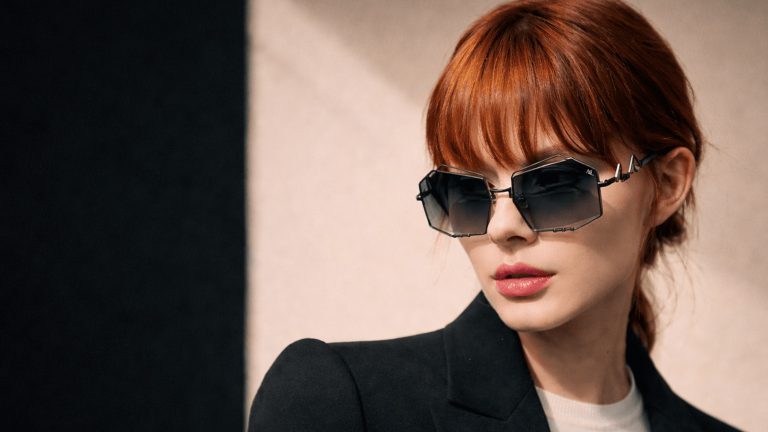
5. Sunglasses
Key function:Blocks UV rays (UV400 is the basic requirement), reduces harsh brightness and glare-related fatigue, and helps protect overall eye health.
Style features:Highly fashion-forward, with a wide variety of frame designs and lens colors.
Best for:Outdoor enthusiasts, fashion-focused wearers, and daily commuters.
Fitting tips:
- Darker lenses don’t automatically mean better protection—the key is whether the lenses are clearly labeled UV400 or provide full UV protection.
- Prescription sunglasses are an option. For frequent outdoor use, consider polarized lenses to reduce reflections.
6. Photochromic Glasses (Light-Adaptive Lenses)
Key function:Clear indoors and automatically darken outdoors—one pair can cover both indoor and outdoor needs.
Style features:Looks like regular glasses but is highly practical.
Best for:Office workers, commuters, outdoor users, and anyone who doesn’t want to switch glasses frequently.
Fitting tips:
- Transition speed and darkness level vary by brand—ask about real-world performance before purchase.
- Check performance inside a car in particular (tinted/insulated windshields may reduce the photochromic reaction).
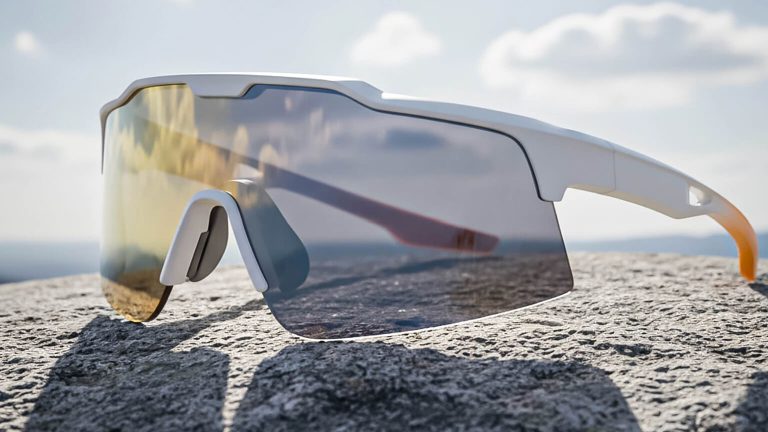
7. Sports Sunglasses
Key function:High-coverage protection with anti-slip and impact resistance, providing stable vision and safety during sports.
Style features:Streamlined designs; lightweight and flexible materials; often paired with grippy nose pads and temples.
Best for:Outdoor sports such as running, hiking, cycling, and water activities.
Fitting tips:
- Confirm the lens impact-resistance level and frame wrap coverage for better protection.
- If you need prescription correction, consider an inner clip insert or custom prescription lenses. Different sports may require different lens curvature and ventilation designs.
8. Plano / Fashion Glasses (Non-Prescription)
Key function:No vision correction—primarily for style and overall look.
Style features:Fashion-forward, design-driven, often used as a styling accessory.
Best for:Fashion lovers, content creators, and anyone who wants eyewear as part of daily styling.
Fitting tips:
- You can choose plano lenses with anti-reflective or blue-light filtering features to improve comfort during screen use.
- Pay attention to frame weight and nose-pad design to avoid marks and discomfort during long wear.
Before You Get Glasses: 5 Key Professional Fitting Tips
1) Identify your main use scenarios first: habits determine the right type of eyewear
Many cases of discomfort aren’t caused by the wrong prescription—they happen because the type of glasses doesn’t match your daily use. Before you get glasses, take a moment to review the situations where you wear them most often, then choose the appropriate type accordingly:
- Long hours on computers/phones: Prioritize anti-reflective, blue-light filtering, and clear intermediate vision
- Frequent outdoor time: Consider UV protection and glare control
- Sports/high activity: Frame stability, anti-slip fit, and impact resistance come first
- Frequent switching between distances (meetings, driving, reading): progressives or specific functional lenses may be more suitable
Clarifying your use scenarios first helps you avoid glasses that are “too much” (over-specified) or “not enough” (under-performing).
2) Accurate refraction is the foundation: it’s not just about “measuring power”
A professional eye exam isn’t only about finding a prescription that looks clear—it’s about finding one that stays comfortable for long wear. The details of the refraction directly affect real-life wearing experience:
- Whether the myopia/hyperopia correction is over- or under-corrected
- Whether the astigmatism axis is precise (misalignment may cause dizziness or visual distortion)
- Whether pupillary distance (PD) is correct, affecting whether the image aligns with your visual axis
- Whether fitting height is measured based on your actual wearing position (especially important for progressives)
Even with the same prescription numbers, different testing and fitting methods can lead to noticeably different comfort.
3) The frame has to “stay put”: long-wear discomfort is often a frame issue, not a prescription issue
Many people assume discomfort means the power is wrong, but a more common reason is a poor-fitting frame. Frame structure affects weight distribution and stability:
- Whether the frame’s weight and center of gravity put too much pressure on the nose bridge
- Whether nose-pad angle and material suit your nose shape
- Whether temple length and bend point sit securely on your head
- Whether the frame size matches your face proportions
A frame that truly fits is what allows the correct prescription to perform at its best.
4) Don’t add coatings blindly: more features don’t always mean better
Lens coatings are meant to solve specific problems—not to stack as many functions as possible. Choose based on real needs to balance visual quality and cost-effectiveness:
- Anti-reflective (AR): Reduces glare, improves comfort for night driving and screen use
- Scratch-resistant coating: Extends lens lifespan; suitable for daily wear
- Anti-smudge / water-repellent: Easier cleaning and maintenance
- Blue-light filtering: Helps reduce screen-related visual fatigue
Selecting coatings based on your needs is the most practical—and professional—approach.
5) For middle-aged and older users, consider progressives: reduce long-term costs and switching hassles
As focusing ability declines with age, many people need clear vision for far, intermediate, and near distances at the same time. If you switch distances frequently, progressives can reduce inconvenience and visual fatigue:
- Distance: walking, driving, outdoor activities
- Intermediate: computer work, meetings, cooking
- Near: phones, reading, detailed tasks
Whether progressives are right for you depends more on lifestyle than age itself.
Getting glasses isn’t a single yes/no decision—it’s a complete match of use scenarios × accurate refraction × frame structure × lens features. When these factors align, glasses become a true tool for improving quality of life.
FAQ (Common Questions Before Getting Glasses)
Q1: If it’s my first pair, what type of glasses should I start with?
A: Start with a basic pair of myopia glasses (or the prescription eyewear you need for refractive correction). Then add blue-light blocking or sunglasses based on your lifestyle needs.
Q2: Can I wear blue-light blocking glasses every day?
A: If you use screens for long hours, daily wear can be appropriate. Still, pair it with good habits—like the 20-20-20 rule, blinking more often, and ensuring adequate ambient lighting.
Q3: Do middle-aged and older adults have to get progressive lenses?
A: Not necessarily. If your main need is near reading, reading glasses may be enough. If you frequently switch between far/intermediate/near (driving, meetings, using a phone), progressives are usually more convenient.
Q4: Does sunglass lens color affect UV protection?
A: UV protection has no direct relationship with how dark the lens looks. The key is whether the lenses are clearly labeled UV400 or provide full UV protection.
Conclusion: Choosing the Right Type of Glasses Improves Both Vision and Quality of Life
After reading this guide—“What Types of Glasses Are There? 8 Common Types Explained (A Must-Read Before Getting Glasses)”—you should now be able to clearly distinguish the functional differences among different eyewear types and who they’re best for. Getting glasses isn’t just a style choice—it’s a long-term investment in daily visual comfort and eye health. Before making your final decision, combine a professional eye exam with your real-life usage scenarios to find glasses that truly feel comfortable for long wear and fit the way you live.
And once you understand the types and functions, product performance in design details and wearing experience often becomes the deciding factor. With more than 40 years of eyewear manufacturing experience, Chi-Fei Optical continues to create frames that balance function and aesthetics—from material selection and structural design to refined wearing details. Whether you need everyday eyewear, long-hour eye protection, or style-driven designs, our mature and stable craftsmanship is built to meet the real needs of different users.